There is a version of bespoke that is simply expensive. A standard product with a custom label, or a minor modification to an existing range dressed up as something made for you. And then there is what we do at ZEBA, which is build things from the frame up for the space they will occupy, the people who will use them, and the years they need to last.
We started out in a retail unit at Salts Mill in Saltaire, more than 20 years ago. The business has changed significantly since then. The principle has not.
Why Standard Rarely Fits
The most literal argument for bespoke is the one about measurement. Most rooms do not conform to the dimensions that standard furniture is designed around. Sofa runs that need to navigate around a chimney breast. Bay windows that require curtains cut in three separate sections. Headboards that must sit at a precise height to align with a feature wall. Off-the-shelf products solve for the average, and the average room is not yours.
But this is only part of it. The more significant argument is about specification.
When we take a brief for a residential sofa, we are asking questions that a showroom rarely asks. What is the height of the people who will sit on it? Do you sit more upright or do you tend to slouch into a cushion? Is this a room where pets are part of daily life? What is the light exposure across the year? Is this a formal room used occasionally, or is it in daily use by a busy household?
The answers to those questions change the specification. The seat depth, the cushion filling, the fabric grade, the base construction. A sofa built to those answers will outlast one chosen from a showroom floor by years, possibly decades.
What Bespoke Actually Means Here
Our production is done in-house or with a small number of specialist manufacturers in the UK who we have worked with for many years. We do not outsource overseas. The reason is control: our ability to specify, inspect, and adjust depends on proximity.
Every curtain is cut and made up in-house. Every upholstered piece is built to a brief we have written ourselves, using fabric we have selected with the client from our library. Every rug we supply is woven to a size, colour specification, and pile weight we have agreed with the client for their specific room.
This is slower than buying from a catalogue. The lead times reflect real production, and we communicate them honestly at the start of every project. It is also more expensive per unit. Not dramatically so, once you account for quality and longevity, but the upfront cost is real, and our guide to interior design costs explains what to expect.
The Fabric Library
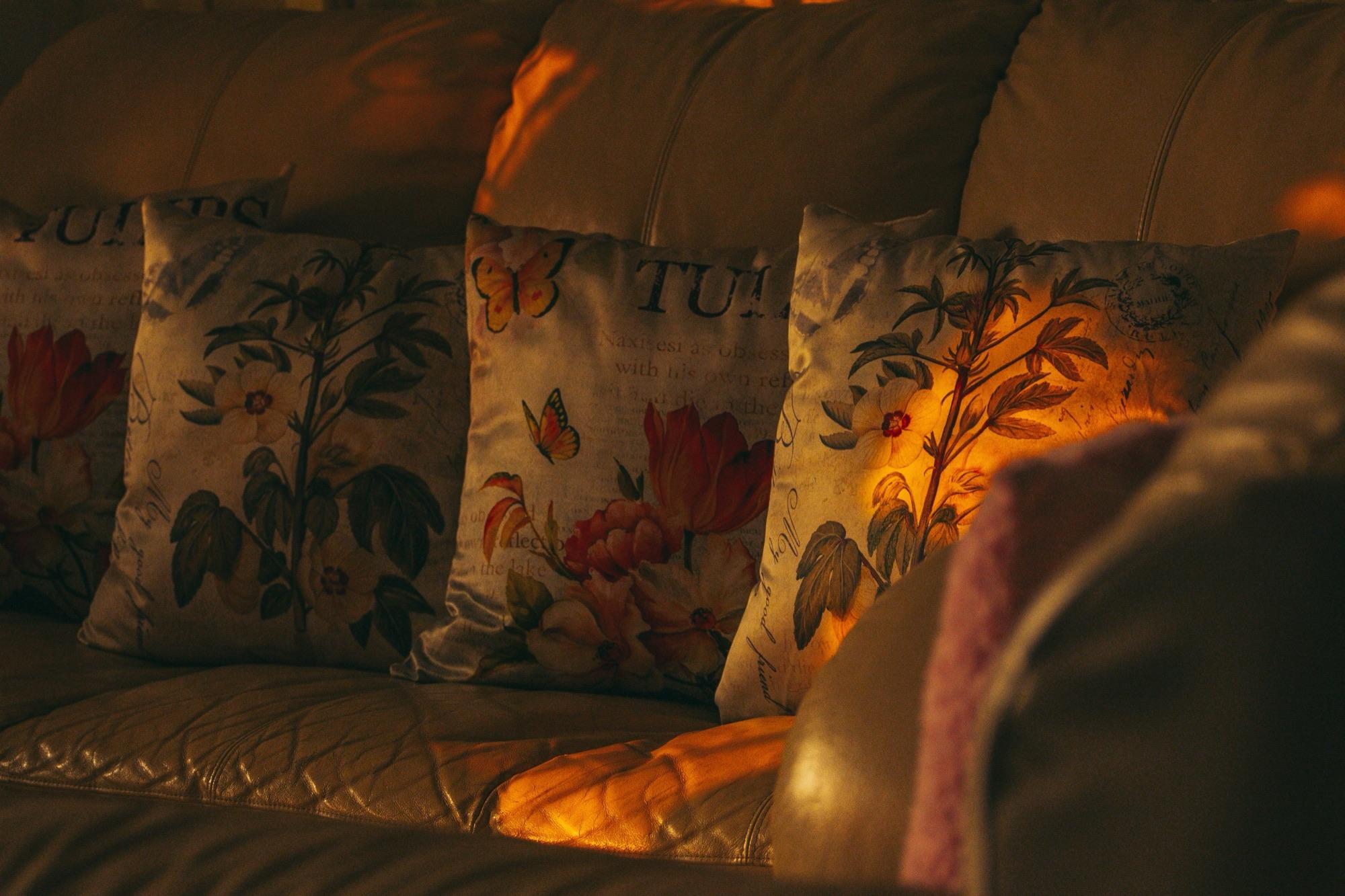
One of the things clients consistently remark on when they visit our Shipley studio is the fabric library. We carry a significant range from leading UK and European fabric houses, spanning every weight, texture, and performance grade.
The reason we encourage in-person visits is simple: fabric decisions made from a digital swatch or a small card sample are frequently regretted. The way a fabric moves, the way it catches light, the way it sits alongside the other materials in a room, these are things that require scale and context to assess properly. A velvet that looks extraordinary on a sample board can look oppressive at curtain scale if the room is not right for it. A linen that seems modest in isolation can transform a bedroom when it runs from ceiling to floor.
We take time with this process because the decision affects everything that follows.
When to Call Us
We work best when we are involved early. Not because we need to control the process, but because the decisions about furniture, soft furnishings, and window treatments interact with decisions about floor finishes, wall colours, and lighting in ways that are much easier to manage before anything is installed.
If you are at concept stage on a residential project or a commercial refurbishment, we would rather have a conversation now than be asked to work around decisions that have already been made. We are based in Shipley, West Yorkshire, and our work takes us across England and Scotland regularly. Edinburgh, Glasgow, London, Manchester and beyond are all within our regular project range.
You can reach us at info@zebainteriors.co.uk or on 07982 778565.